
Masayoshi Son and Greg Hayes
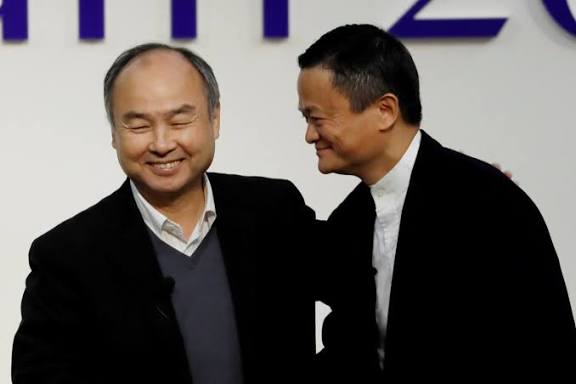
Masayoshi Son and Greg Hayes: Two Distinct Paths to Global Business Leadership
When the names Masayoshi Son and Greg Hayes appear together, they represent two highly influential business careers shaped by very different industries. Masayoshi Son is best known as the founder and long-time leader of SoftBank Group, with a career centred on technology, telecommunications, investment and artificial intelligence. Greg Hayes, meanwhile, built his reputation through finance, corporate strategy and aerospace and defence, eventually becoming chairman and chief executive of RTX.
Although both men have operated at the highest levels of international business, there is no publicly established family relationship or direct business partnership between them. Their stories are more useful as a comparison of two approaches to leadership, investment, corporate transformation and long-term strategy.
Who Is Masayoshi Son?
Masayoshi Son is a Japanese entrepreneur and business leader who founded the company that became SoftBank Group in 1981. According to SoftBank Group, Son has continued to serve as its chairman and chief executive and has overseen its expansion from a technology-focused business into a major global investment and technology organisation.
Early Vision and SoftBank
Son’s career has been closely connected with his belief that computing and communications would transform society. His early interest in computer technology helped shape his ambitions, eventually leading to the creation of SoftBank.
Over the decades, the company expanded into telecommunications, internet businesses, investment and advanced technology. Son also became associated with major investments and acquisitions, including SoftBank’s involvement with Alibaba and the acquisition of Arm.
A Technology-Focused Strategy
One of the defining characteristics of Son’s career has been his willingness to invest in technologies that he believes could become important in the future. His strategy has included telecommunications infrastructure, semiconductors, artificial intelligence and computing.
SoftBank Group’s current corporate direction places significant emphasis on artificial intelligence and what Son describes as the development towards artificial superintelligence. In its 2026 annual report, Son described AI as a central part of the group’s future strategy
Who Is Greg Hayes?
Greg Hayes developed his career in a very different environment. His professional background is strongly associated with finance, industrial management and aerospace and defence.
Hayes spent nearly 21 years at United Technologies Corporation, joining through its merger with Sundstrand Corporation in 1999. He eventually became UTC’s chief executive in 2014 and chairman in 2016. (RTX)
From Finance to Corporate Leadership
Before becoming chief executive, Hayes served as UTC’s chief financial officer from 2008 to 2014. His financial background gave him extensive experience in corporate planning, capital allocation and business transformation.
His leadership at UTC involved reshaping the company’s portfolio. UTC separated businesses such as Sikorsky, Otis and Carrier while concentrating increasingly on aerospace.
The Creation of RTX
One of the most significant events in Hayes’ career was the combination of UTC’s aerospace businesses with Raytheon.
The transaction was completed in 2020, creating Raytheon Technologies, which was subsequently renamed RTX. Hayes became chief executive of the newly created company. (RTX)
This placed him at the centre of one of the most significant corporate combinations in the aerospace and defence sector.
Masayoshi Son and Greg Hayes: Is There a Direct Connection?
Despite the two names sometimes appearing together in online discussions, there is no publicly documented evidence of a family relationship between Masayoshi Son and Greg Hayes.
There is also no established record showing that Hayes worked for SoftBank or that Son held an executive position at RTX.
The connection between them is therefore primarily comparative.
Both have led major international organisations and made strategic decisions involving technology, capital and large-scale corporate structures. However, their professional environments have been substantially different.
Comparing Their Leadership Backgrounds
Son’s Entrepreneurial Approach
Masayoshi Son is fundamentally an entrepreneur and founder. He created SoftBank and has remained closely associated with its strategic direction for decades.
His approach has often involved identifying technologies that could become important in the future and allocating substantial capital towards them.
SoftBank’s involvement with Arm is an important example. Son has served as chairman of Arm and has maintained a close connection with the semiconductor company. SoftBank Group currently identifies Arm as an important part of its technology portfolio. (SEC)
Hayes’ Corporate Management Approach
Greg Hayes developed through an established corporate environment rather than founding his own global company.
His career involved financial management, business restructuring, mergers and the operation of large industrial organisations. At UTC and later RTX, strategic decisions had to account for manufacturing, engineering, customers, employees, suppliers and government relationships.
This difference is important when considering the careers of Masayoshi Son and Greg Hayes. Son has largely operated as a founder, investor and strategic technology leader, while Hayes’ career has been rooted in corporate management and industrial transformation.
Technology as a Common Theme
Despite their different careers, technology is one area where their professional stories overlap.
Son and Artificial Intelligence
For Son, artificial intelligence has become a major strategic focus. SoftBank’s recent corporate messaging has emphasised AI infrastructure, computing, semiconductors and the longer-term development of artificial superintelligence.
SoftBank has also worked on AI-related telecommunications projects. Its collaboration with NVIDIA around AI-RAN demonstrates how the company is exploring ways to combine communications infrastructure with AI computing.
Hayes and Advanced Aerospace Technology
Hayes’ technology interests were shaped by aerospace and defence rather than consumer technology.
During his leadership of RTX, the company operated through businesses including Collins Aerospace, Pratt & Whitney and Raytheon. These businesses work across aircraft systems, engines, defence technologies and other complex engineering fields.
This demonstrates a different form of technological leadership. Rather than investing primarily in emerging digital platforms, Hayes operated within industries where research, engineering, manufacturing and long development cycles are essential.
Their Approach to Corporate Transformation
Son’s Expansion Across Industries
Son’s transformation of SoftBank involved moving beyond its original business activities and creating a broad technology and investment ecosystem.
SoftBank has participated in telecommunications, internet services, investment funds, semiconductors and AI-related initiatives. Its strategy has therefore been based partly on anticipating where technology could move next.
Investment and Long-Term Thinking
Son has frequently pursued opportunities with a long-term horizon. This approach can involve significant uncertainty because emerging technologies do not always develop as expected.
Nevertheless, his career demonstrates how a founder can use capital, acquisitions and strategic investments to build a global technology organisation.
Hayes’ Portfolio Restructuring
Hayes’ transformation of UTC followed a different path.
Rather than building a technology investment portfolio, he worked to focus the company’s operations. UTC’s businesses were reorganised, with Otis and Carrier becoming independent companies and the remaining aerospace operations eventually combining with Raytheon.
The resulting RTX structure brought together major aerospace businesses under one organisation.
What Can We Learn from Masayoshi Son and Greg Hayes?
The careers of Masayoshi Son and Greg Hayes demonstrate that there is no single route to becoming a major global business leader.
Different Industries, Different Decisions
Son’s decisions have largely centred on technological opportunity and investment. His work requires assessing emerging markets, innovation and future technological possibilities.
Hayes’ decisions have involved industrial operations, financial discipline, aerospace programmes, corporate restructuring and large-scale mergers.
The difference illustrates how leadership strategies are often shaped by the industries in which executives operate.
A Focus on Long-Term Change
Another common feature is an emphasis on major structural change.
Son helped transform SoftBank from its original technology business into a much broader global technology and investment group.
Hayes helped reshape UTC before leading the formation of RTX following its combination with Raytheon.
Both careers therefore provide examples of leaders operating during periods of significant organisational change.
Where Greg Hayes Stands Today
Hayes’ executive role at RTX has changed since his time as chief executive.
Christopher Calio succeeded Hayes as RTX’s president and chief executive in May 2024. Hayes subsequently became executive chairman, before stepping down from that position and the RTX board in April 2025. RTX announced that he would serve as a special adviser to the CEO through January 2026.
This transition marked the end of Hayes’ formal board leadership at RTX while reflecting the importance of a planned leadership succession.
Where Masayoshi Son Stands Today
Masayoshi Son remains chairman and chief executive of SoftBank Group. The company’s current strategy continues to place significant attention on AI, semiconductors and advanced computing.
SoftBank’s corporate information identifies Son as its representative director, corporate officer, chairman and CEO.
His current vision is increasingly centred on AI and the infrastructure required to support increasingly advanced intelligent systems.
Final Thoughts on Masayoshi Son and Greg Hayes
The story of Masayoshi Son and Greg Hayes is not a story of two executives who built the same type of business. Instead, it is a comparison between two very different approaches to global corporate leadership.
Son’s career has been driven by entrepreneurship, technology investment and a strong focus on future computing trends. Hayes built his career through finance, corporate management, industrial restructuring and aerospace leadership.
Their professional paths demonstrate how business leaders can create lasting influence through very different methods. Son has focused heavily on technologies that he believes will shape the future, while Hayes played a major role in restructuring established industrial businesses and helping create RTX.
Understanding both careers provides a broader view of modern business leadership. One represents the world of technology investment and entrepreneurial vision; the other represents corporate transformation, aerospace and industrial strategy. Their stories are distinct, but both show how major decisions can reshape organisations and entire industries over time. wemagazine.co.uk