What Is the Capital City of Switzerland?
Capital City of Switzerland: Discover Bern, the Historic Heart of the Swiss Confederation
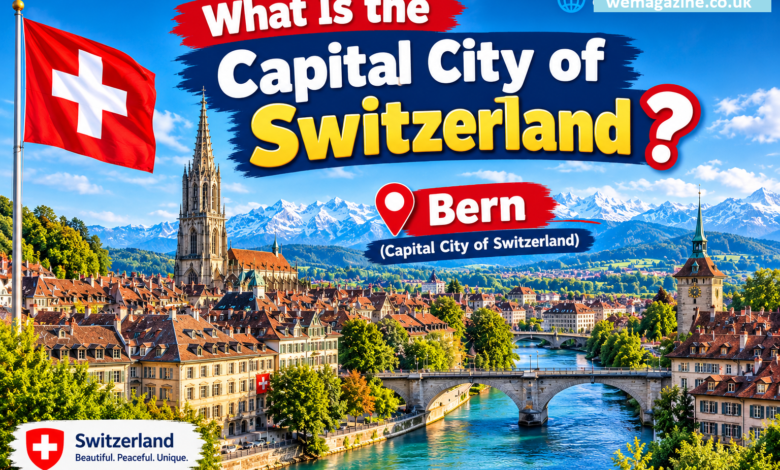
When people search for the capital city of Switzerland, the answer is Bern. However, Switzerland has an unusual political arrangement: Bern is officially known as the federal city rather than a capital in the strict constitutional sense. It is the seat of the Swiss government, Parliament and much of the federal administration, making it the country’s de facto capital.
Located beside the River Aare, Bern combines medieval architecture, political importance, cultural attractions and natural beauty. Its historic centre has been recognised as a UNESCO World Heritage Site since 1983, while its position at the centre of Swiss political life gives the city national importance.
What Is the Capital City of Switzerland?
The capital city of Switzerland is Bern, although the country does not formally designate a capital city in its constitution. Instead, Bern is officially described as the “federal city”.
This distinction is an interesting feature of Switzerland’s federal system. The Federal Council, Switzerland’s seven-member executive government, meets at the Federal Palace in Bern, while the Swiss Parliament also carries out its work there.
Why Is Bern Called the Federal City?
Switzerland became a modern federal state in 1848. At that time, Bern was selected as the seat of the federal authorities. The decision reflected the country’s federal structure and helped avoid giving one region an unnecessarily dominant position.
Bern was chosen on 28 November 1848 as the federal seat. Its central location and support from French-speaking cantons were among the considerations behind the decision.
Bern and the Swiss Government
Bern remains the centre of national political administration. The Federal Palace is one of the city’s most important buildings and is where the Federal Council meets and Parliament holds its sessions.
The city also accommodates much of the federal administration, as well as numerous embassies and international organisations.
A Brief History of Bern
Bern has a history stretching back more than 800 years. The city was founded in 1191 by the Dukes of Zähringen and gradually developed into an important political and economic centre.
From Medieval Town to Federal Centre
Bern joined the Swiss Confederacy in 1353. Over the following centuries, its influence grew as Switzerland developed from a loose alliance of territories into the modern federal state.
A major turning point came in 1848, when Switzerland adopted a federal constitution and established its modern federal government. Bern was selected as the federal seat that same year.
The Growth of Modern Bern
During the 20th century, Bern developed beyond its political role and became a major service centre. Today, the city is associated with government, education, research, healthcare, business, culture and tourism.
The city administration describes Bern as the political centre of Switzerland and highlights its importance in science, education, sport and culture.
Bern’s Famous Old Town
One of the biggest attractions in the capital city of Switzerland is Bern’s Old Town. The historic centre contains medieval buildings, fountains, towers, covered arcades and narrow streets.
The Old Town was added to the UNESCO World Heritage list in 1983, recognising its historical and architectural significance.
The Zytglogge Clock Tower
The Zytglogge is one of Bern’s most recognisable landmarks. This historic clock tower stands in the Old Town and has become an important symbol of the city.
Visitors can explore the surrounding streets and admire the traditional sandstone architecture that gives central Bern its distinctive appearance.
Bern Minster
Another prominent landmark is Bern Minster, a magnificent Gothic cathedral overlooking the Old Town. Its architecture and tall tower contribute to the city’s historic skyline.
The area surrounding the cathedral is also a pleasant place to explore on foot, particularly for visitors interested in architecture and history.
The Covered Arcades
Bern is famous for its long covered arcades, which stretch through much of the Old Town. They provide shelter from rain and snow while also housing shops, cafés, restaurants and other businesses.
These arcades are not merely practical features; they have become an important part of Bern’s identity and urban character.
The Federal Palace of Switzerland
The Federal Palace, or Bundeshaus, is at the heart of Switzerland’s political system. It is the seat of the country’s Parliament and an important workplace for the federal government.
Parliament and National Government
Switzerland has a bicameral Federal Assembly consisting of the National Council and the Council of States. Together, they represent the country’s population and cantons.
The Federal Council serves as Switzerland’s executive authority. Its seven members work collectively to govern the country, and the Council meets weekly at the Federal Palace in Bern.
A Symbol of Swiss Federalism
The Federal Palace represents more than government administration. It also reflects Switzerland’s federal political structure, in which authority is divided between the Confederation, 26 cantons and communes.
This decentralised system is an important reason why the terminology surrounding Bern is different from that used in many other countries.
Bern’s Location and Natural Beauty
Bern is situated beside the River Aare, which curves around parts of the city. This geographical setting gives the capital a distinctive combination of urban and natural landscapes.
The River Aare
The Aare is closely connected with everyday life in Bern. Walking along the river provides views of the Old Town, bridges and surrounding landscape.
During warmer months, the river is also an important recreational feature for local residents and visitors.
Parks and Green Spaces
Bern has numerous parks and green areas where people can relax away from the busy streets. The Rose Garden is particularly well known for its views across the Old Town and the Aare.
The combination of historic architecture, river scenery and green spaces makes Bern different from many larger European cities.
Bern as a Cultural and Educational Centre
Although government is central to Bern’s identity, the city is much more than an administrative centre.
Bern has museums, theatres, galleries, music venues and educational institutions. The city is also home to the University of Bern and has developed an international reputation in research and science.
Museums and Art
The city’s cultural attractions include the Bern Historical Museum, the Kunstmuseum Bern and the Zentrum Paul Klee. Together, they provide opportunities to explore Swiss history, art and international culture.
Science and Research
Bern is also recognised for research in areas including medicine, climate science and technology. Its universities and research institutions contribute to Switzerland’s wider reputation as a centre for education and innovation.
Bern Compared With Zurich and Geneva
People sometimes confuse Bern with Zurich or Geneva when looking for the capital city of Switzerland.
Zurich is Switzerland’s largest city and a major financial and economic centre. Geneva is internationally known for diplomacy and international organisations. Bern, meanwhile, is the country’s political centre and federal city.
Why Bern Is the Capital in Practical Terms
The distinction is therefore straightforward:
- Bern is the federal city and de facto capital.
- The Federal Council meets in Bern.
- The Swiss Parliament is based in Bern.
- Much of the federal administration operates from Bern.
- Zurich is the largest city but is not the national political centre.
- Geneva has major international importance but is not Switzerland’s capital.
Understanding these differences makes the unusual Swiss system easier to appreciate.
Why Visit the Capital City of Switzerland?
Bern offers a combination of history, culture, politics and nature that makes it an appealing destination.
Visitors can walk through the UNESCO-listed Old Town, see the Zytglogge, visit the Federal Palace, explore museums and enjoy views of the River Aare. Switzerland Tourism also highlights attractions such as the BearPark, Bern Minster and Rose Garden.
A Walk Through History
One of the simplest ways to experience Bern is by walking through its historic centre. The compact layout allows visitors to see many major landmarks within a relatively short distance.
The sandstone buildings, fountains, covered walkways and historic towers create an atmosphere that connects modern Switzerland with its medieval past.
Frequently Asked Questions About the Capital City of Switzerland
Is Bern the capital city of Switzerland?
Yes. Bern is commonly described as the capital city of Switzerland and is the country’s de facto capital. Officially, however, Switzerland calls Bern the “federal city” rather than formally designating a constitutional capital.
When did Bern become the federal capital?
Bern was selected as the seat of the federal authorities in 1848, when Switzerland became a modern federal state.
Is Zurich the capital of Switzerland?
No. Zurich is Switzerland’s largest city and an important economic and financial centre, but Bern is the federal city and political centre.
Why does Switzerland not officially have a capital?
Switzerland’s federal structure means that national authority is distributed between the Confederation, cantons and communes. Rather than formally declaring a capital, the country established Bern as the seat of the federal authorities.
What is Bern famous for?
Bern is famous for its UNESCO-listed Old Town, Federal Palace, Zytglogge clock tower, covered arcades, River Aare, medieval architecture, museums and role as the political centre of Switzerland.
Conclusion
The capital city of Switzerland is Bern, although the more precise official term is the federal city of Bern. Since 1848, it has served as the seat of Switzerland’s federal government and Parliament, making it the country’s political heart.
Beyond politics, Bern offers a remarkable combination of medieval heritage, cultural attractions, scientific institutions and natural scenery. Its UNESCO-listed Old Town, historic clock tower, Federal Palace and location beside the River Aare make it an important destination for anyone interested in Switzerland.
Understanding Bern also provides an insight into what makes Switzerland distinctive. Rather than concentrating all authority in a formally designated capital, Switzerland’s federal system distributes power across different levels of government. Bern nevertheless plays the central national role that people generally associate with a capital city. wemagazine.co.uk