What Is Offas Dyke?
Offas Dyke: A Historic Boundary That Shaped Britain
Offa’s Dyke is one of the most impressive ancient monuments in Britain. Stretching across parts of England and Wales, this massive earthwork tells an important story about power, borders, and early medieval history. Even today, Offa’s Dyke continues to attract historians, hikers, and visitors who want to understand its role in shaping the landscape and identity of Britain.
What Is Offas Dyke?
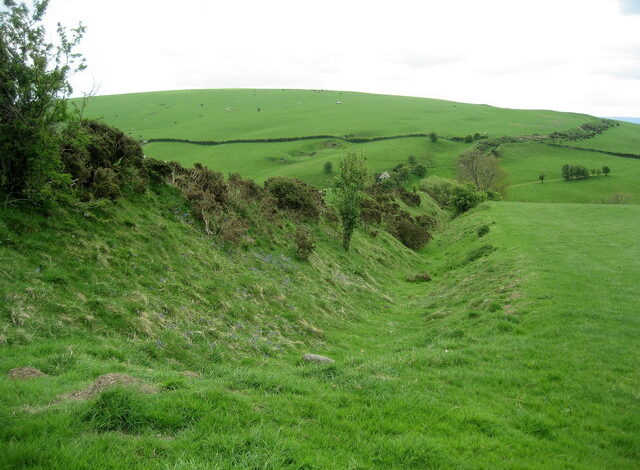
Offa’s Dyke is a large linear earthwork made up of a ditch and a bank. It was constructed during the 8th century and is traditionally linked to King Offa of Mercia, one of the most powerful Anglo-Saxon rulers of the time. The dyke roughly follows the border between modern-day England and Wales.
Although it does not form a continuous wall, surviving sections of Offa’s Dyke still stretch for about 82 miles (132 km), making it one of the longest ancient monuments in the UK.
Who Built Offa’s Dyke and Why?
Offa’s Dyke is believed to have been built during King Offa’s reign (757–796 AD). Offa ruled the kingdom of Mercia and wanted to defend his territory from Welsh kingdoms to the west.
The main purposes of Offa’s Dyke likely included:
- Marking a political boundary
- Demonstrating Mercian power and authority
- Controlling movement and trade across the border
- Providing a defensive advantage
Rather than being a complete defensive wall, Offa’s Dyke functioned more as a symbolic and strategic boundary.
Where Is Offa’s Dyke Located?
Offa’s Dyke runs from near the River Dee in the north to close to the River Wye in the south. It passes through several counties, including:
- Flintshire
- Powys
- Shropshire
- Herefordshire
The dyke is typically built with the ditch on the Welsh side, suggesting it was designed to face potential threats from that direction.
Offa’s Dyke Path: A Modern Walking Route
Today, Offa’s Dyke is famous not only for its history but also for the Offa’s Dyke Path, a long-distance walking trail that follows much of the ancient earthwork.
Key facts about the Offa’s Dyke Path:
- It is approximately 177 miles (285 km) long
- It runs from Chepstow to Prestatyn
- It passes through countryside, hills, and historic towns
- It is popular with walkers, hikers, and history enthusiasts
The path allows people to experience Offa’s Dyke up close while enjoying some of the most scenic landscapes in Britain.
Archaeological and Historical Importance
Offa’s Dyke is a Scheduled Ancient Monument, meaning it is legally protected due to its national importance. Archaeological studies show that its construction required significant planning, labor, and resources.
The dyke helps historians understand:
- Anglo-Saxon engineering skills
- Early medieval politics
- Relationships between English and Welsh kingdoms
- How borders were controlled before modern maps
Even though some sections have been damaged or lost over time, the remaining parts of Offa’s Dyke still provide valuable historical evidence.
Myths and Misunderstandings About Offa’s Dyke
There are several myths surrounding Offa’s Dyke. One common misunderstanding is that it marked the exact border between England and Wales. In reality, the modern border does not always follow the dyke.
Another myth is that Offa’s Dyke was entirely built by King Offa himself. While he likely ordered its construction, thousands of workers would have been involved over many years.
Why Offa’s Dyke Still Matters Today
Offa’s Dyke remains important because it represents one of the earliest large-scale attempts to define territory in Britain. It also shows how landscapes were shaped by politics and conflict long before modern nations existed.
Today, Offa’s Dyke connects history, culture, and nature. It reminds us how the past continues to influence borders, identities, and heritage in the present.
Conclusion
Offa’s Dyke is far more than an ancient mound of earth. It is a powerful symbol of early British history, reflecting ambition, control, and craftsmanship. Whether studied by historians or walked by modern adventurers, Offa’s Dyke continues to stand as a lasting mark on the landscape and the story of Britain.
Here is a unique, easy-to-read, and accurate FAQ section about Offa’s Dyke, written in clear English and using the keyword naturally.
Frequently Asked Questions (FAQ) About Offa’s Dyke
What is Offa’s Dyke?
Offa’s Dyke is a large ancient earthwork built in the 8th century. It consists of a raised bank and a ditch and runs along parts of the border between England and Wales. It is one of the most important early medieval monuments in Britain.
Who ordered the construction of Offa’s Dyke?
Offa’s Dyke is traditionally associated with King Offa of Mercia, who ruled from 757 to 796 AD. He likely ordered its construction to mark his kingdom’s western boundary and to show political control over the region.
Was Offa’s Dyke a defensive wall?
Offa’s Dyke was not a defensive wall like a castle or fortress. Instead, it acted as a boundary marker and a symbol of power. While it may have slowed movement, its main purpose was political rather than military.
How long is Offa’s Dyke?
The surviving sections of Offa’s Dyke stretch for about 82 miles (132 km). However, the modern Offa’s Dyke Path, which follows the monument and nearby routes, is around 177 miles (285 km) long.
Does Offa’s Dyke mark the exact border between England and Wales?
No, Offa’s Dyke does not always match the modern England–Wales border. In many places, the current border lies east or west of the dyke, showing that boundaries have changed over time.
Can you still see Offa’s Dyke today?
Yes, many parts of Offa’s Dyke are still visible. Some sections are well preserved, while others have been damaged by farming or development. Several areas are protected as Scheduled Ancient Monuments.
What is the Offa’s Dyke Path?
The Offa’s Dyke Path is a long-distance walking trail that follows much of the ancient earthwork. It runs from Chepstow in the south to Prestatyn in the north and is popular with walkers and history lovers.
Why is Offa’s Dyke historically important?
Offa’s Dyke is important because it shows how early medieval rulers controlled land and borders. It also provides insight into Anglo-Saxon engineering, politics, and relationships between English and Welsh kingdoms.
Is Offa’s Dyke a UNESCO World Heritage Site?
No, Offa’s Dyke is not currently a UNESCO World Heritage Site. However, it is legally protected in the UK due to its historical and archaeological importance.
Why is Offa’s Dyke still relevant today?
Offa’s Dyke remains relevant as a symbol of early British history and identity. It attracts tourists, supports outdoor recreation, and helps people understand how historical boundaries shaped modern Britain.